Visit Chiang Mai Night Safari
Chiang Mai Night Safari is a nocturnal wildlife park best known for its guided tram rides through open animal zones after dark. The visit feels more like a staged evening circuit than a traditional zoo day out, with a walking trail, tram rides, and show timings all shaping your pace. The biggest difference between a rushed visit and a good one is arriving early enough to do Jaguar Trail before the tram queues build. This guide covers timing, routes, tickets, and what to prioritize.
Quick overview: Chiang Mai Night Safari at a glance
If you want the smoothest visit, make your key decisions before you arrive: when to go, which session to book, and whether you need transport.
- When to visit: Daily from 11am to about 10pm. Arriving around 4pm–5pm is noticeably calmer than 7pm–8pm, because you can walk Jaguar Trail first and then catch earlier tram departures before the evening crowd stacks up.
- Getting in: From about ฿800 for day access and around ฿1,100 for night access for foreign adults. Guided tickets with transfers usually start around ฿1,800–2,200, and booking ahead matters most from November to February and on holiday weekends because session capacity is limited.
- How long to allow: 3–4 hours for most visitors. It stretches toward 4 hours if you want both tram zones, Jaguar Trail, animal feeding, and the fountain show without rushing.
- What most people miss: Jaguar Trail before sunset, and the Swan Lake fountain area after the trams; many visitors go straight to the first ride and skip the quieter walking section entirely.
- Is a guide worth it? A guide is most useful if you want hotel transfers and help syncing tram and show times, but independent visitors usually do fine with the English-language tram commentary and a little planning.
🎟️ Time slots for Chiang Mai Night Safari can fill several days ahead during cool-season weekends and holiday periods. Lock in your visit before the evening departure you want is gone.
Jump to what you need
🕒 Where and when to go
🗓️ How much time do you need?
🎟️ Which ticket is right for you?
🗺️ Getting around
🦒 Which animals to prioritize
♿ Facilities and accessibility
Where and when to go
How do you get to Chiang Mai Night Safari?
The park sits in Hang Dong, about 16km southwest of Chiang Mai Old City, and it feels more like a countryside evening outing than a quick city-center stop.
33 Moo 12, Nong Kwai, Hang Dong, Chiang Mai, Thailand
- Taxi / Grab: Chiang Mai Old City → 30–40 min → the simplest option, especially for the return trip after dark.
- Taxi / Grab: Chiang Mai International Airport → about 30 min → useful if you’re heading straight from arrival to the park.
- Hotel shuttle: Selected resort hotels offer limited shuttle service → timing varies → ask your hotel well in advance because seats are fixed and not universal.
- Self-drive: On-site parking is free → easiest if you want full control over tram and show timing.
Which entrance should you use?
There is one main visitor entrance, and the mistake most people make is arriving too late for the tram departure they want. Even with a pre-booked ticket, the evening experience runs best if you’re through the gate before the first tram queues form.
- Main entrance: Located off Ratchaphruek Road. Best for all ticket holders. Expect around 10–20 min wait on quieter nights, and longer on cool-season weekends.
When is Chiang Mai Night Safari open?
- Monday–Sunday: Jaguar Trail and daytime access from 11am–8pm
- Monday–Sunday: Main night safari experience and evening shows from about 5:30pm–10pm
- Tram departures: Earliest Savanna departures usually begin around 5:30pm
- Last practical arrival: Around 7:30pm if you want both tram zones and the fountain show without rushing
When is it busiest? Friday–Sunday evenings, Thai holiday periods, and November–February are the busiest, with the heaviest buildup around 7pm when late arrivals, tram riders, and showgoers all overlap.
When should you actually go? Arrive around 4pm–5pm so you can do Jaguar Trail in daylight and board the earlier Savanna ride before the park shifts into its loudest, most crowded window.
How much time do you need?
| Visit type | Route | Duration | Walking distance | What you get |
|---|---|---|---|---|
Highlights only | Entrance → Savanna Safari tram → Predator Prowl tram → fountain show → exit | 2.5–3 hr | ~1 km | You get the signature night experience and both tram zones, but you’ll skip Jaguar Trail and most slow-paced animal spotting on foot. |
Balanced visit | Entrance → Jaguar Trail → Savanna Safari tram → snack break → Predator Prowl tram → fountain show → exit | 3–4 hr | ~2.2 km | This is the best fit for most visitors because it adds the walking trail and lets you see both daylight and night activity without feeling rushed. |
Full exploration | Entrance → Jaguar Trail in daylight → animal feeding stops → Savanna Safari tram → dinner break → Predator Prowl tram → fountain show → photo stops and gift shop → exit | 4+ hr | ~3 km | You’ll cover the park properly, including feeding moments and show time, but it’s a longer evening with a lot of standing between scheduled departures. |
Which Chiang Mai Night Safari ticket is best for you
| Ticket type | What's included | Best for | Price |
|---|---|---|---|
Chiang Mai Night Safari Tickets | Entry to Chiang Mai Night Safari with access to tram safaris, Jaguar Trail, tiger and predator shows, musical fountain performances, animal encounters, and park facilities | Planning your own route to the park while exploring the safari at a flexible pace once inside | From ฿940 |
Chiang Mai Night Safari Tickets with Transfers | Safari admission plus shared hotel pickup and drop-off from select Chiang Mai hotels | A more convenient evening visit where you want transport arranged before and after the safari experience | From ฿1,400 |
How do you get around Chiang Mai Night Safari?
Think of the park as 4 practical zones: Jaguar Trail, Savanna Safari boarding, Predator Prowl boarding, and the Swan Lake show area. You need about 2–2.5 hours for the headline experience, and 3–4 hours if you want the park to feel complete instead of rushed.
A smart crowd-flow move here is to do Jaguar Trail before dusk, because later arrivals create bottlenecks at the tram boarding areas while the trail becomes less rewarding in full darkness.
The park layout
The visit works best if you think of it as 3 linked zones: Jaguar Trail on foot, Savanna Safari by tram, and Predator Prowl by tram. Highlights take around 2.5–3 hours, while a fuller visit with feeding stops and the fountain show usually lands closer to 3–4 hours.
One crowd-flow tip matters here: do the walking trail first, because once the main tram departures start, most people never circle back to it.
- Jaguar Trail: Walking loop around Swan Lake with smaller exhibits and birdlife → budget 30–45 min.
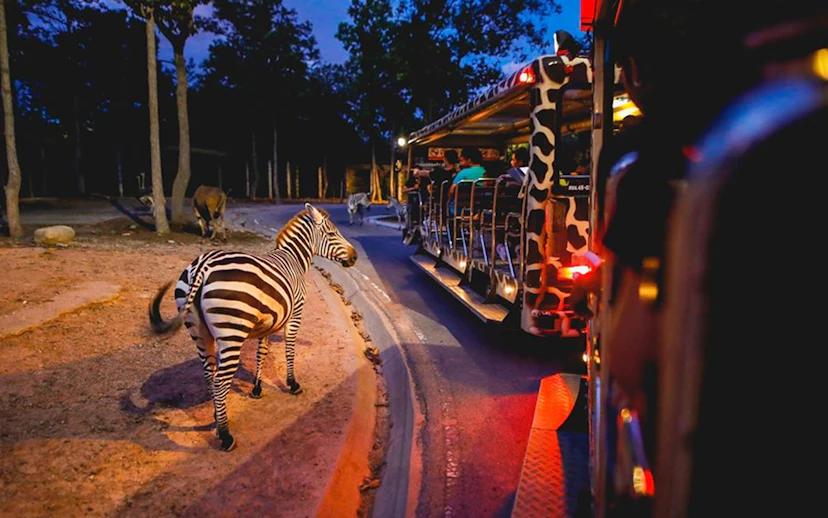
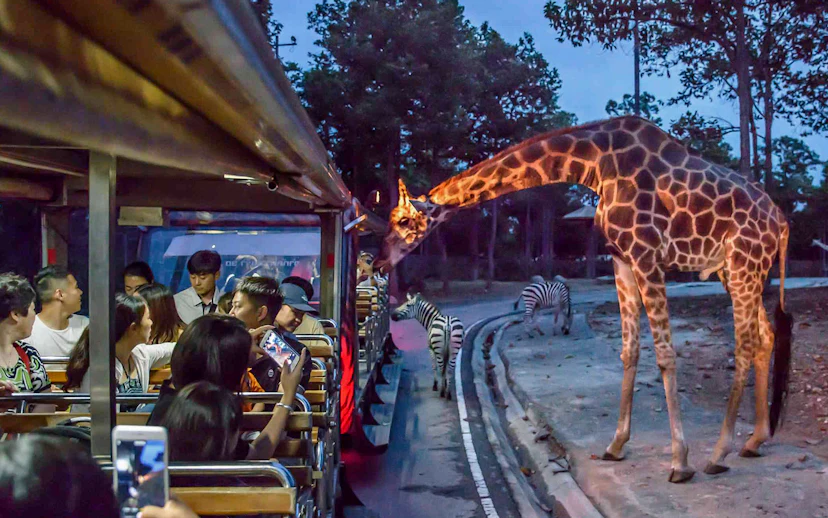
- Savanna Safari: Open grazing habitat with giraffes, zebras, kangaroos, rhinos, and antelope → budget 30–45 min including queue time.
- Predator Prowl: Big-cat and predator circuit with white tigers, lions, owls, and other carnivores → budget 20–30 min including queue time.
- Swan Lake show area: Fountain and evening entertainment zone with benches and photo stops → budget 20–30 min.
Suggested route: Start with Jaguar Trail while there’s still daylight, then ride Savanna before the park gets fully crowded, and finish with Predator Prowl and the fountain show so you’re not backtracking across the grounds after dark.
Maps and navigation tools
- Map: An on-site visitor map is the most useful format here because the park is compact and built around timed tram departures.
- Signage: Wayfinding is good enough for the walking areas, but timing matters more than navigation once the evening tram queues begin.
- Audio guide / app: The tram commentary is the real guide tool here, with English available on selected rides, so most visitors don’t need a separate app.
- Outdoor navigation: The park roads are easy enough to navigate by car, but booking your return ride ahead matters more than in-park mapping.
💡 Pro tip: Do Jaguar Trail before you board your first tram, because most visitors leave it too late and end up choosing between the walking loop and the evening shows.
Which animals and habitats should you prioritize?

Savanna herd encounter
Species/habitat: Giraffes, zebras, white rhinos, antelope, and red kangaroos in the Savanna Zone
This is the part of Chiang Mai Night Safari that feels closest to a real safari, because the tram moves through wide enclosures where herbivores often come right up to the vehicle. Slow down for the feeding moments rather than treating them as a quick photo stop. What many visitors miss is how active the first departures can be, before the later-night noise builds.
Where to find it: On the Savanna Safari tram route, usually the first major ride of the evening
White tigers in the predator zone
Species/habitat: White Bengal tigers in the Predator Prowl area
The predator section is shorter than the Savanna ride, but it’s the most dramatic after dark. The low light works in your favor here, because the white tigers stand out clearly when they move, pause, or turn toward the tram. Many visitors rush to photograph the first pass and miss the second, quieter look when the guide slows down near the enclosure.
Where to find it: On the Predator Prowl tram circuit after the Savanna ride
Lions and night hunters
Species/habitat: Lions, coyotes, owls, vultures, and other carnivores in the Predator Zone
This section matters less for sheer quantity and more for behavior. The real payoff is watching how different species react once the park is fully in night mode, especially compared with a daytime zoo. One easy detail to miss is the birdlife here: many visitors focus only on the cats and ignore the owls and vultures entirely.
Where to find it: Along the later half of the Predator Prowl tram route
Clouded leopards and slow lorises
Species/habitat: Small nocturnal mammals on Jaguar Trail
Jaguar Trail is quieter and easier to self-pace than the tram zones, which is exactly why it’s worth doing before sunset. The clouded leopard exhibits and smaller nocturnal species reward a slower look, especially if you’re visiting with children who need a break from queues and loud commentary. Many people skip this loop and later realize they missed some of the park’s most intimate sightings.
Where to find it: Along the 1.2 km Jaguar Trail loop around Swan Lake
Flamingos, swans, and the lake setting
Species/habitat: Water birds and lakeside habitats around Swan Lake
This is not the headline wildlife zone, but it changes the feel of the visit. Around Swan Lake, the park shifts from safari pacing to a more relaxed evening atmosphere, which is why it works well at the end of your route. The detail many visitors miss is that this area also gives you the cleanest pause for photos before or after the fountain show.
Where to find it: Around Swan Lake, between Jaguar Trail and the evening show area
Animal feeding stops
Species/habitat: Deer, giraffes, zebras, tapirs, and other herbivores at feeding points
Feeding is one of the most memorable parts of the park because it changes the tram from passive viewing to active interaction. Buy feed on site and listen closely to staff instructions, because not every animal should be hand-fed in the same way. What visitors often miss is that the best feeding moments happen when the tram slows, not when everyone reaches out at once.
Where to find it: At designated feeding moments on the Savanna route and selected outdoor stations
Facilities and accessibility
- 🎒 Bags: Large bags are best left at your hotel because the park does not allow them inside.
- 🍽️ Dining: There are on-site dining areas and snack counters, which are useful for a quick break between tram rides rather than a destination meal.
- 🛍️ Gift shop: Gift shops are available on site, and they make the most sense as a last stop after the evening shows.
- 🪑 Seating: Benches are available around the Swan Lake fountain viewing area, which is the easiest place to sit down between scheduled experiences.
- 🅿️ Parking: Free on-site parking is available, which makes self-driving one of the least stressful ways to visit.
- ♿ Mobility: The tram rides cut down the amount of walking, but Jaguar Trail is a 1.2 km outdoor loop, so the easiest visit is tram-focused rather than trail-heavy.
- 👁️ Visual impairments: Low lighting is part of the experience, so the park is easier with a companion than a daytime zoo would be, especially on the predator tram.
- 🧠 Cognitive and sensory needs: Loudspeaker commentary can feel intense, and the main evening window is the noisiest part of the visit.
- 👨👩👧 Families and strollers: Strollers are allowed, and the route works best if you do the walking trail before queues build around the tram platforms.
Chiang Mai Night Safari works well for children because the visit mixes short ride segments, feeding moments, and enough movement between zones to keep the evening from feeling static.
- 🕐 Time: Around 3 hours is realistic with young children, and the best family route is Jaguar Trail first, then one or both tram rides, then the fountain show.
- 🏠 Facilities: The easiest family break point is around Swan Lake, where you’ll find seating and space to pause before the next scheduled activity.
- 💡 Engagement: Let children save one handful of animal feed for the Savanna ride, because that is usually the moment they remember most.
- 🎒 Logistics: Bring hearing protection for sound-sensitive children, and avoid arriving too close to 7pm when the park feels loudest and most crowded.
- 📍 After your visit: Chiang Mai Night Market is a good follow-up if your family still has energy and wants a late snack back in the city.
Rules and restrictions
What you need to know before you go
- Entry requirement: Book the correct day, night, or combo session in advance if you can, because tram timing is central to the visit and evening capacity is limited.
- Bag policy: Large bags are not allowed inside, so carry only what you need for a few hours and keep the rest at your hotel or in your car.
- Re-entry: Plan this as one continuous visit, because the park sits 30–40 minutes from the city and stepping out mid-evening can cost you a full tram slot.
Not allowed
- 🚫 Outside food and drink: Outside food is not allowed, so use the on-site dining areas or eat before you arrive.
- 🖐️ Animal feeding: Feed only at approved points and follow staff instructions, because not every animal can be hand-fed safely.
- 🖐️ Direct contact: Do not reach toward animals unless staff tell you to, and avoid hand-feeding zebras because they can bite hard.
Photography
Photos are a big part of the visit, and the tram rides, feeding moments, and Swan Lake area are all built around that. The practical distinction is lighting: the Savanna and Jaguar Trail are easier for clear photos earlier in the evening, while the predator zone is darker and less forgiving. Keep your flash use restrained around animals, and follow any show-area instructions if live performances are running.
Good to know
- Noise levels: The loudspeaker commentary can be much louder than visitors expect, especially for children or anyone sensitive to sound.
- Timing trap: The most common mistake is arriving late and then trying to fit Jaguar Trail, both trams, and the fountain show into the same final 2 hours.
Practical tips
- Booking and arrival: Book at least a few days ahead if you’re visiting from November to February or on a Thai holiday weekend, and aim to arrive 30–45 minutes before the first tram you want rather than exactly at departure time.
- Pacing: Save your patience for the Savanna ride, because that’s where the park feels most special; by contrast, the fountain show is a pleasant finish but not the part to build your whole evening around.
- Crowd management: The smartest timing here is around 4pm–5pm, because you can do Jaguar Trail before the park’s loudest period and still catch early tram departures with shorter waits.
- What to bring or leave behind: Bring a small bag only, because large bags are not allowed and extra stuff just slows you down during the walk-tram-show pattern.
- Food and drink: Either eat a late lunch before you go or plan a quick on-site snack between the 2 tram zones, because a full sit-down meal in the middle of the visit can make you miss the departure you wanted.
- Families: Pack ear protection if your child is noise-sensitive, because several visitors find the commentary volume more intense than expected.
- Transport: If you’re not driving, arrange your return ride before you enter the park, because getting back to Chiang Mai late at night is the part most likely to feel inconvenient.
What else is worth visiting nearby?
Commonly paired: Wat Phra That Doi Suthep
Distance: About 40 min by car from central Chiang Mai, usually paired on the same day before the safari
Why people combine them: It gives you Chiang Mai’s best-known temple in daylight, then a wildlife-focused evening without splitting your sightseeing across 2 separate days.
Commonly paired: Chiang Mai Zoo & Aquarium
Distance: About 15 min from central Chiang Mai, and easy to combine with a later safari evening
Why people combine them: The zoo covers daytime species and aquarium exhibits that the night safari does not, so the 2 experiences feel complementary rather than repetitive.
Also nearby
Elephant Nature Park
Distance: Around 60 min from Chiang Mai by road
Worth knowing: This is the better fit if you want a half-day or full-day animal experience with more focus on elephants and sanctuary-style visits.
Chiang Mai Night Market
Distance: About 30–40 min back toward the city from the safari
Worth knowing: It works well after the park if you want food, shopping, or a softer end to the evening than heading straight back to your hotel.
Eat, shop and stay near Chiang Mai Night Safari
- On-site: The park has dining areas and snack counters that work best as a convenience stop between tram rides rather than a reason to arrive hungry.
- Timing: If you want the smoothest visit, eat a late lunch before the park and use on-site food only for a quick refill before the predator tram.
- After the visit: Chiang Mai Night Market back in the city is the better bet if you want a fuller dinner after the park closes.
- 💡 Pro tip: Don’t sit down for food right before your preferred tram departure, because queue timing matters more here than meal timing.
- Park gift shop: Buy souvenirs at the end of the evening rather than before your first tram, so you’re not carrying extra bags through the walking trail and show areas.
- Night Market in Chiang Mai: If you want more variety than park merchandise, do your shopping back in the city after the visit.
The area around Chiang Mai Night Safari is better for a quiet resort-style night than for a full Chiang Mai base. It’s more rural, more car-dependent, and far less flexible than staying in the city if you want food, markets, and easy transport. If your only goal is a relaxed night near the park, it can work well. If you want Chiang Mai at your doorstep, it is not the best fit.
- Price point: The area skews toward quieter resort stays rather than the widest budget range you’ll find in the city center.
- Best for: Visitors with a car, families who want a simple park-focused evening, and travelers planning just 1 night near the attraction.
- Consider instead: Chiang Mai Old City or the Night Bazaar area are usually better for longer stays because they make transport, food, and evening plans much easier.
Frequently asked questions about visiting Chiang Mai Night Safari
Most visits take 3–4 hours. That gives you enough time for Jaguar Trail, the Savanna and Predator tram rides, a short food break, and the fountain show. If you arrive late, the same park can feel much shorter because you’ll spend more of that time working around departure schedules and queues.
Yes, it’s smart to book in advance, especially for cool-season weekends and holiday periods. Evening capacity is limited, and the experience works around timed departures more than open wandering. Advance booking matters less on quiet rainy-season weekdays, but it still makes the evening easier to plan.
It can be worth it if you’re visiting on a busy weekend and want to protect a tight evening schedule. This is not a site with monumental daytime entry lines, but missing a tram departure can cost you more time than the gate itself. If you arrive early on a weekday, standard entry is usually enough.
Arrive 30–45 minutes before the first tram or show you care about most. That buffer gives you time for ticket checks, feed purchases, and orienting yourself before the park gets noisy and crowded. If you want to do Jaguar Trail first, arriving around 4pm–5pm works especially well.
You can carry a small bag, but large bags are not allowed inside. Because the visit is only a few hours and includes tram boarding, it’s best to pack light anyway. A small bag for water, wipes, and hearing protection is much easier than carrying extra weight around the trail and queue areas.
Yes, photography is part of the experience. The easiest shots come on Jaguar Trail and the earlier Savanna departures, while the predator route is darker and harder for phone cameras. Keep flash use restrained around animals, and follow any instructions in show areas if live entertainment is running.
Yes, groups visit easily because the experience is already organized around shared tram departures and show times. The main thing to manage is timing, not route-finding. Larger groups should agree on a tram plan before entering, because splitting up and regrouping later is harder once the evening schedule starts moving.
Yes, it works well for families, especially if your children enjoy short rides, feeding moments, and seeing animals up close. The best family version of the visit is usually Jaguar Trail first, then the Savanna ride, then either the predator tram or the fountain show depending on energy levels. Noise-sensitive children may need ear protection.
The tram rides reduce walking, which helps, but the park is still an outdoor venue with a 1.2 km walking trail and low-light conditions. If walking distance is your main concern, a tram-focused visit is the easiest way to do it. Families with strollers generally find the park manageable, but the trail-heavy version is less easy than the ride-heavy one.
Yes, there are on-site dining areas and snack counters. They’re useful for a quick break between experiences, but many visitors prefer to eat before arriving or wait until they’re back in Chiang Mai for a fuller meal. If timing matters to you, don’t let a food break make you miss your preferred tram.
Yes, feeding is one of the most memorable parts of the visit. Feed is sold on site, and staff instructions matter because different animals are handled differently. The most popular feeding moments happen on the Savanna route, where giraffes, deer, and other herbivores often come close to the tram.
The best time to visit is around 4pm–5pm. That timing lets you do Jaguar Trail before dark and still catch earlier tram departures before the main evening rush. November to February has the best weather, but it is also the busiest season, so book ahead if you want specific evening slots.
.svg?auto=compress%2Cformat&w=156&h=48&q=90&crop=faces&fit=crop)